Underpinning in Geelong
Underpinning re-supports a house whose concrete slab or strip footings have sunk, usually by extending the footing down to firmer soil or onto screw piles. It suits brick and brick veneer homes; houses on stumps need restumping instead. Every underpinning job in Victoria needs an engineer's design and a building permit.
- Free inspections
- Itemised quotes
- Permits handled
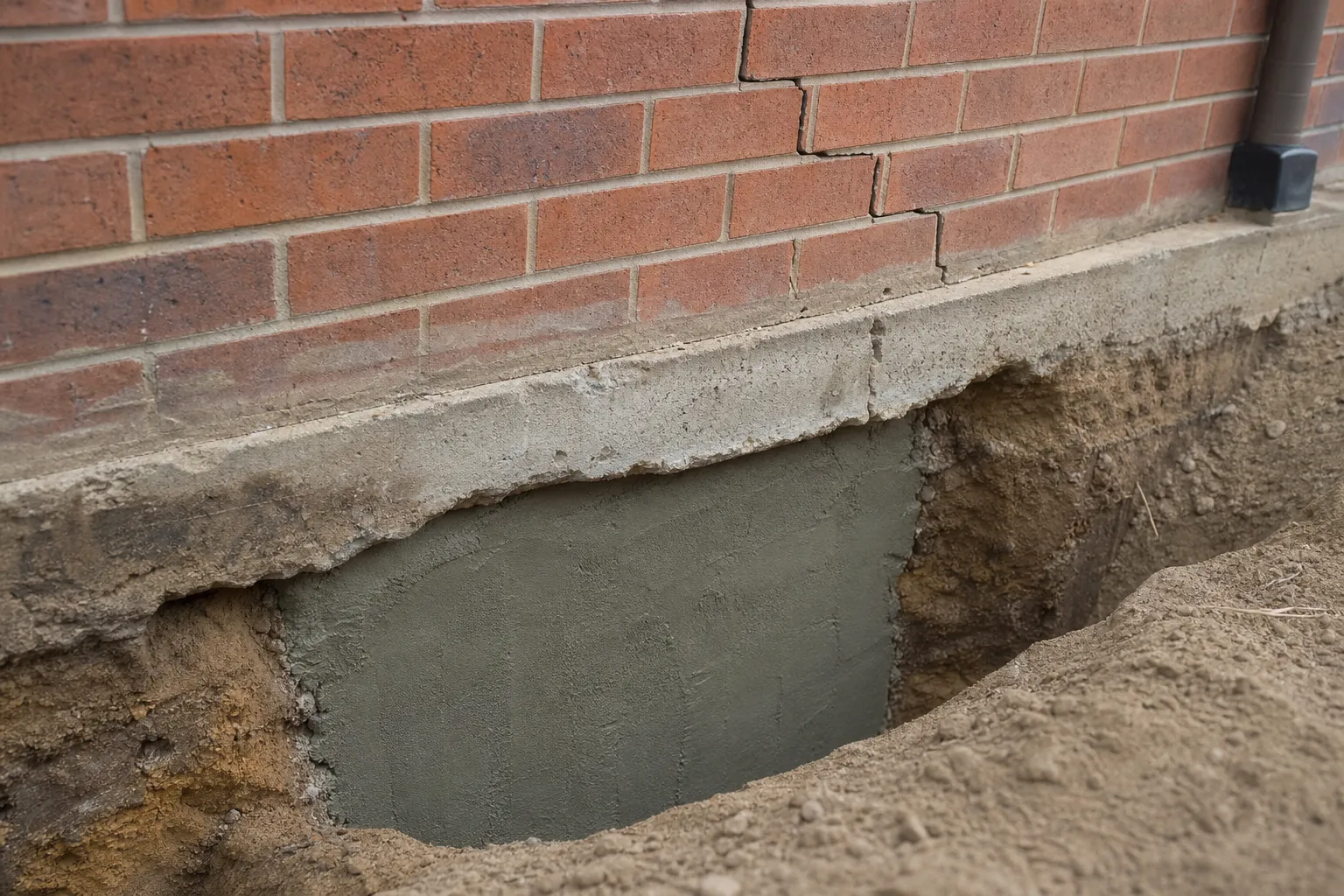
Cracks stepping through brickwork, doors rubbing on their frames, one corner of the slab dropping away: those are footing problems, and footings can't be fixed by restumping. Underpinning is the repair for homes built on a concrete slab or on strip footings, which covers most brick and brick veneer houses around Geelong.
The usual cause here is reactive clay. Long dry spells shrink the soil and it drops away from under the footing; wet winters swell it back. Leaking pipes, blocked downpipes and large trees close to the house make it worse. Underpinning transfers the load of the affected wall down to soil that doesn't move, either with mass concrete poured beneath the footing or with steel screw piles.
Underpinning is engineered per house, so prices vary more than restumping, and firm numbers only come after a proper look at the soil and an engineer's input. Restumping Geelong inspects, explains which walls need support and which don't, and quotes the job in writing. Get in touch to book a free inspection.
Signs you need underpinning
- Stair-step cracks through external brick mortar joints
- Cracks over windows and doorways that keep reopening after patching
- A slab edge or corner that has visibly dropped
- Doors and windows out of square along one side of the house
- Gaps between the wall and the floor, or between brickwork and window frames
How the job runs
Inspection and diagnosis
We look at the crack pattern, floor levels and drainage to work out which footings have moved, why, and whether underpinning is actually needed.
Engineer's design
A structural engineer specifies the underpinning method, depth and spacing for your soil. Your quote is based on that design, not a guess.
Building permit
Underpinning is structural work under Victorian regulations. The permit is issued by a registered building surveyor before excavation starts.
Underpinning work
Pits are dug beneath the affected footing in stages, new support is installed and the footing is lifted or stabilised one section at a time.
Certificate of final inspection
The surveyor signs off the completed work, so you have documentation for resale and insurance.
Why choose Restumping Geelong
- We tell you when underpinning isn't needed. Some cracked homes only need drainage fixed, and we'll say so.
- Engineer-designed work, not one-size-fits-all piers.
- Permits handled start to finish with a registered building surveyor.
- One contractor for mixed jobs: underpinning the slab extension and restumping the original house under the same permit.
Related services
Where we do this work
We service Geelong, the Bellarine Peninsula and the Surf Coast. Suburbs where this job comes up often:
Get a free underpinning quote
Tell us about your place and we will get back to you with an honest assessment and a fixed price.
Frequently Asked Questions
What is the difference between underpinning and restumping?
Restumping replaces the stumps under a timber-floored house. Underpinning strengthens or extends the concrete footings under a house built on a slab or strip footings. The construction of your home decides which one you need, and homes with a mix of both floor types sometimes need both repairs.
How much does underpinning cost?
There's no honest flat rate. The price depends on how many sections of footing need support, how deep the firm soil sits, and access around the house. Small jobs supporting one corner cost far less than re-supporting a full wall. A fixed written quote follows the inspection and the engineer's design.
What causes footings to sink in Geelong?
Reactive clay soil is the usual culprit. It swells in wet winters and shrinks hard in dry summers, and the movement lets footings drop. Leaking plumbing, poor stormwater drainage and thirsty trees near the house all speed it up. Fixing the water problem is part of the repair.
Is underpinning covered by home insurance?
Usually not. Most policies exclude damage from gradual settlement, soil movement and wear and tear, which covers the majority of underpinning jobs. Damage from a sudden insured event, such as a burst pipe or flood, is sometimes claimable. Check your product disclosure statement and talk to your insurer first.