Reblocking
Reblocking is the Victorian term for restumping: replacing the stumps a house sits on once they rot, sink or crack.
Restumping Geelong restumps Belmont homes on both sides of High Street: the interwar weatherboards near the river and the postwar houses that spread west toward Highton. Rotted stumps come out, concrete or steel goes in, and the floors come back to level. Request a quote and we'll inspect your subfloor and give you a written price.
Belmont turned from farmland into a suburb in two bursts. The first came after the new Barwon River bridge opened in 1926 and the tram was extended to Roslyn Road the year after, which pulled 1920s and 30s housing up the hill from the river. The second came after the Second World War, when housing spread west toward Highton. Both eras built mostly timber-framed homes on stumps.
Those stumps are now 70 to 100 years old, and Belmont keeps restumping crews busy. If the floors in your place off High Street have developed a lean, or cracks keep coming back above the doorways, request a quote. We'll crawl the subfloor, count what's failed and price the fix.
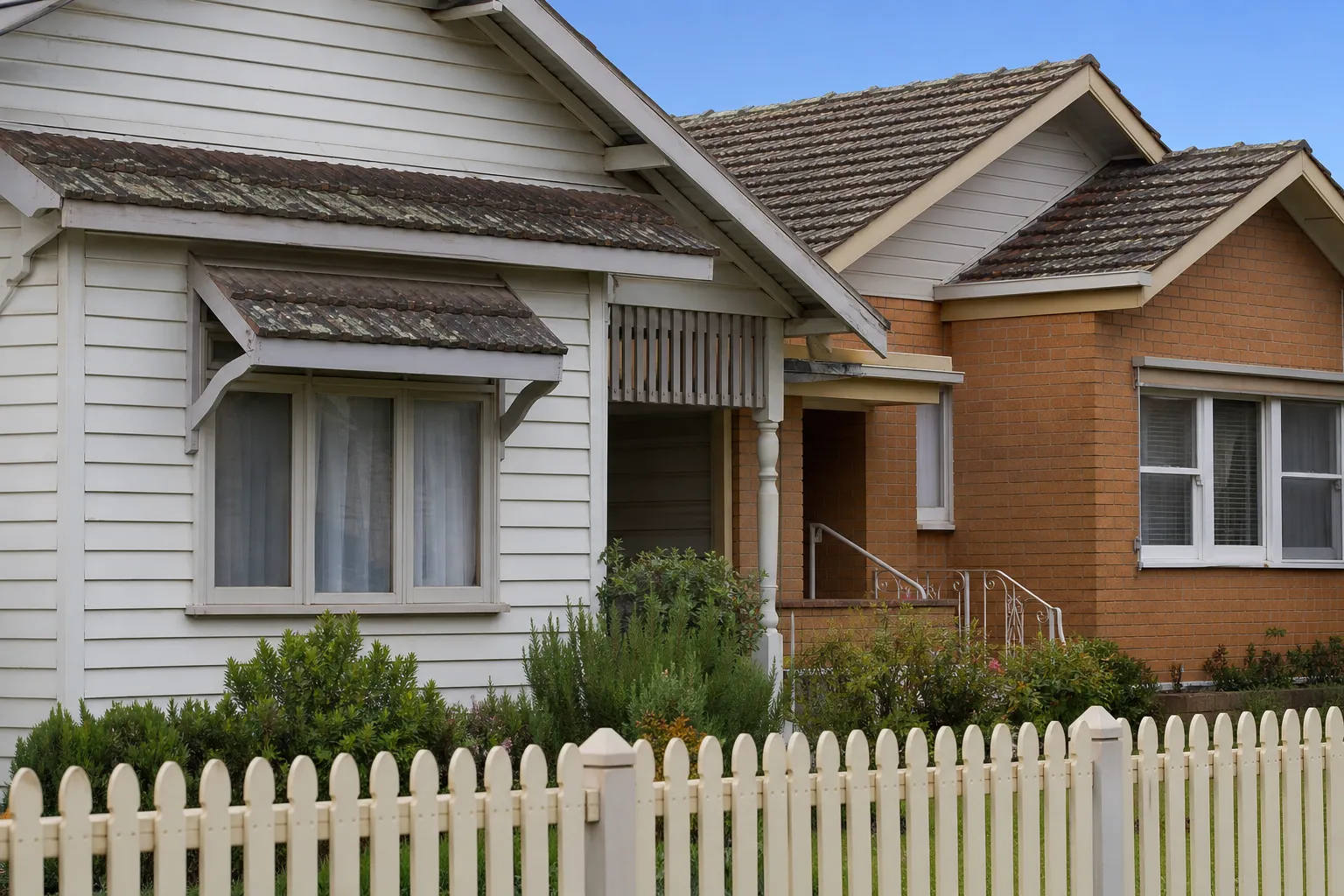
The older streets between the river and High Street carry the interwar stock: weatherboard bungalows built as affordable homes for textile workers, clerks and tradesmen when the suburb first took off. South and west of there the housing steps forward in time, with 1950s and 60s weatherboards and brick veneers filling the blocks toward Roslyn Road. Interwar homes are almost always on timber stumps; the postwar ones vary between timber and early concrete.
Belmont sits on the south side of the Barwon on the same reactive clay as the rest of Geelong. Summer shrinkage and winter swelling rock stumps in their holes a little every year, and on the ground sloping toward the river the movement is uneven. That's why a Belmont home often drops on one side first rather than settling evenly.
Reblocking is the Victorian term for restumping: replacing the stumps a house sits on once they rot, sink or crack.
Underpinning re-supports a house whose concrete slab or strip footings have sunk, usually by extending the footing down to firmer soil or onto screw piles.
House levelling, also called relevelling, brings sloping floors back to level by jacking the house and packing or adjusting the existing stumps.
A full restump of an average Geelong home usually costs $4,000 to $20,000.
Tell us about your place and we will get back to you with an honest assessment and a fixed price.
Either, and sometimes both under one house. Postwar builders in Geelong used timber and early concrete stumps side by side, and later repairs added more variety. Early concrete stumps fail too; the steel inside rusts and splits the concrete. We check every stump regardless of material.
Often, yes. Where the high side is sound we can restump and relevel the dropped side only. It costs less, but it only makes sense if the remaining stumps genuinely have life left in them. We'll tell you honestly which situation you're in after the inspection.