Signs You Need Restumping
The main signs a house needs restumping: floors that slope or bounce, cracks in plaster and cornices, doors and windows that stick, gaps under skirting boards, and stumps that are soft or leaning underneath. Any two together justify an inspection. There's no fixed schedule; stump material and soil moisture set the clock.
- Free inspections
- Itemised quotes
- Permits handled
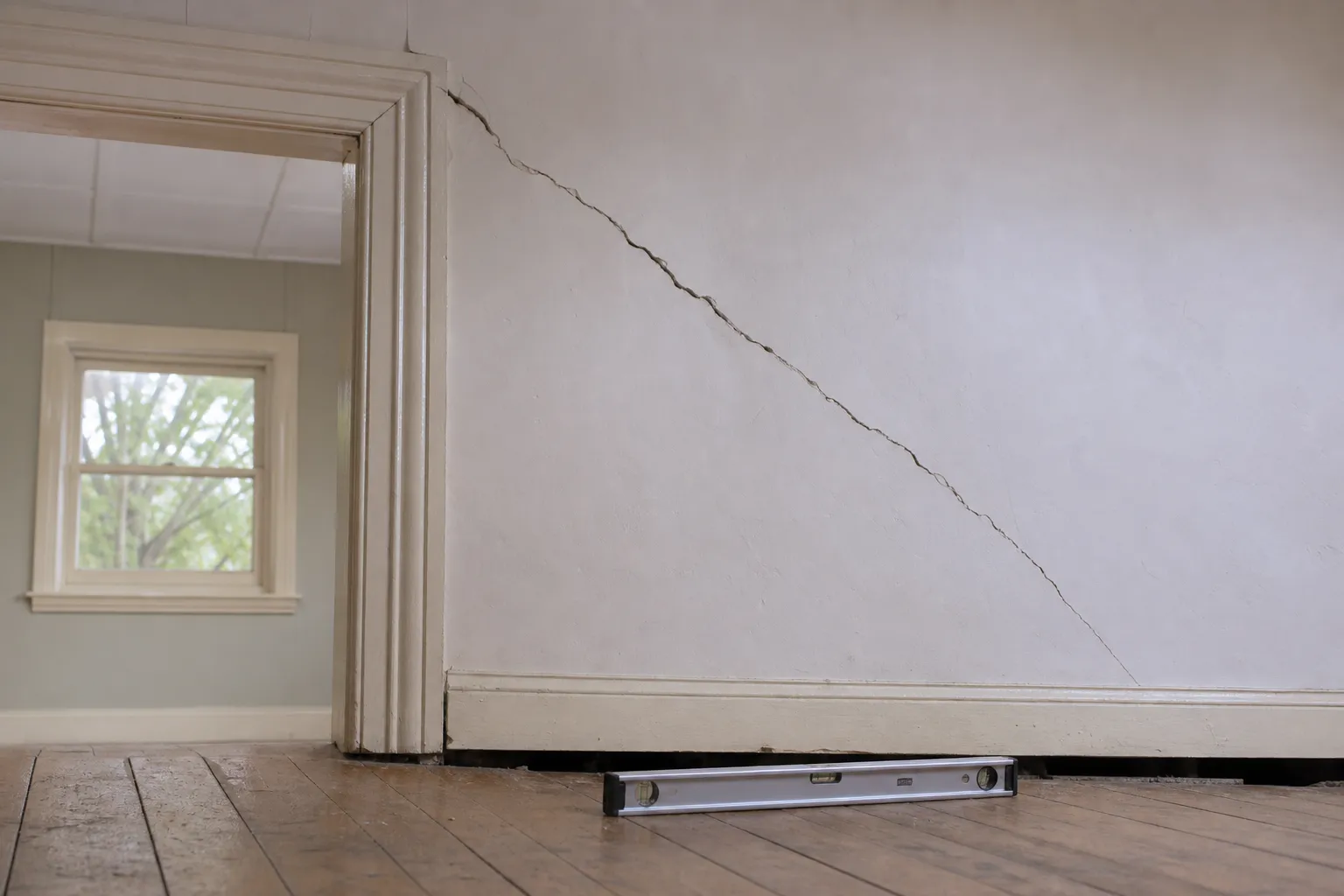
Houses announce failing stumps slowly, and the early signs are easy to blame on other things. A door that sticks gets planed. A crack gets filled and painted. The floor's always been a bit off, hasn't it? Each sign is ambiguous on its own; together they draw a map of which part of the house is moving.
The pattern matters more than any single symptom. Stump problems cluster: the sticking doors, the cracks and the floor slope usually all point at the same zone, often a damp side of the house. Movement that tracks the seasons, worse after dry summers or wet winters, points at Geelong's reactive clay working on the stumps and footings.
The check is cheap and definitive: floor levels mapped with a laser, and every stump probed under the house. Restumping Geelong does exactly that as a free inspection, then tells you plainly whether you need nothing, a relevel, a partial restump or the full job. If you're buying an older home, do it before you sign anything.
The signs to watch for
- Floors that slope, dip or bounce, especially along one side of the house
- Cracks in plaster walls and cornices that reopen after patching
- Doors and windows that stick, jam or no longer latch
- Gaps between floors and skirting boards, or between walls and ceilings
- Stumps that are soft at ground level, leaning or visibly crumbling
- Damp, musty subfloor air or persistent mould at the base of walls
How the job runs
Free inspection
Floor levels mapped room by room, and every stump checked and photographed under the house.
Plain-English verdict
Nothing wrong, relevel, partial restump or full restump: you get the finding with the photos to back it.
Itemised quote
If work is needed, it is priced per stump with materials and permit costs shown separately.
Permit and works
Structural stump work goes through a registered building surveyor before it starts, as Victorian regulations require.
Certificate and records
Completed work is signed off, and you keep the paperwork that answers the question for the next buyer.
Why choose Restumping Geelong
- Free inspections with photos, so you see what we see under the house.
- A plain verdict: nothing, relevel, partial or full, with the reasons in writing.
- Written quotes you can take into price negotiations when buying an older home.
- Servicing all of Geelong, the Bellarine Peninsula and the Surf Coast.
Related services
Get a free restumping quote
Tell us about your place and we will get back to you with an honest assessment and a fixed price.
Frequently Asked Questions
How often should you restump a house?
There's no set interval; it comes down to materials and moisture. Original timber stumps on older homes commonly need replacing after several decades, sooner in damp ground, while concrete and steel replacements are rated for 50 years plus. Skip the schedule and get the subfloor inspected every few years once a home passes 40.
Should I buy a house that needs restumping?
It can be a good buy if you price the work before you commit. Get a subfloor inspection during your due diligence period, get a written restumping quote, and negotiate on the evidence. Restumping is a known, fixable cost; what hurts buyers is discovering it after settlement instead of before.
Are cracked walls always a stump problem?
No. Hairline cracks from seasonal movement, shrinking render and normal settling are common in older homes and mostly cosmetic. Cracks earn attention when they're wide, stepped through brickwork, keep reopening, or arrive alongside sloping floors and sticking doors. The combination, not the crack alone, points at stumps.
What are the alternatives to restumping?
If the stumps are sound, relevelling (packing or adjusting them) corrects sloping floors for far less. If only some stumps have failed, partial restumping replaces just those. For homes on slabs or strip footings, underpinning is the equivalent repair. Nothing rescues a genuinely rotten stump, though: replacement is the only lasting fix.
How much movement is normal for an old house?
Some. Timber-framed homes on clay flex with the seasons, and few century-old floors are dead level. Normal movement is small, stable and seasonal. Worth investigating is movement that grows year on year, concentrates in one zone, or arrives with new cracks and sticking doors. An inspection is the cheap way to tell them apart.