Reblocking
Reblocking is the Victorian term for restumping: replacing the stumps a house sits on once they rot, sink or crack.
Restumping Geelong restumps and relevels Corio homes built during the suburb's 1960s and 70s expansion. Timber stumps from that era are failing now, and the symptoms are familiar: sloping floors, sticking doors, cracking cornices. Request a quote and we'll inspect under the house and price the fix in writing.
Corio took over where Norlane left off. By 1960 the Housing Commission's streets had reached Corio Village, and through the 1960s and 70s the suburb filled with homes for the workforce of the northern factories. The stock is a mix: timber-framed weatherboards on stumps, and brick veneer homes that often still have stumped timber floors inside their brick skins.
Homes from this era are hitting the age where stumps fail, a decade or two behind Norlane's. If you've noticed a slope in the hallway or a gap opening under the skirting, it's worth an inspection before the movement spreads. Request a quote and we'll have a look.
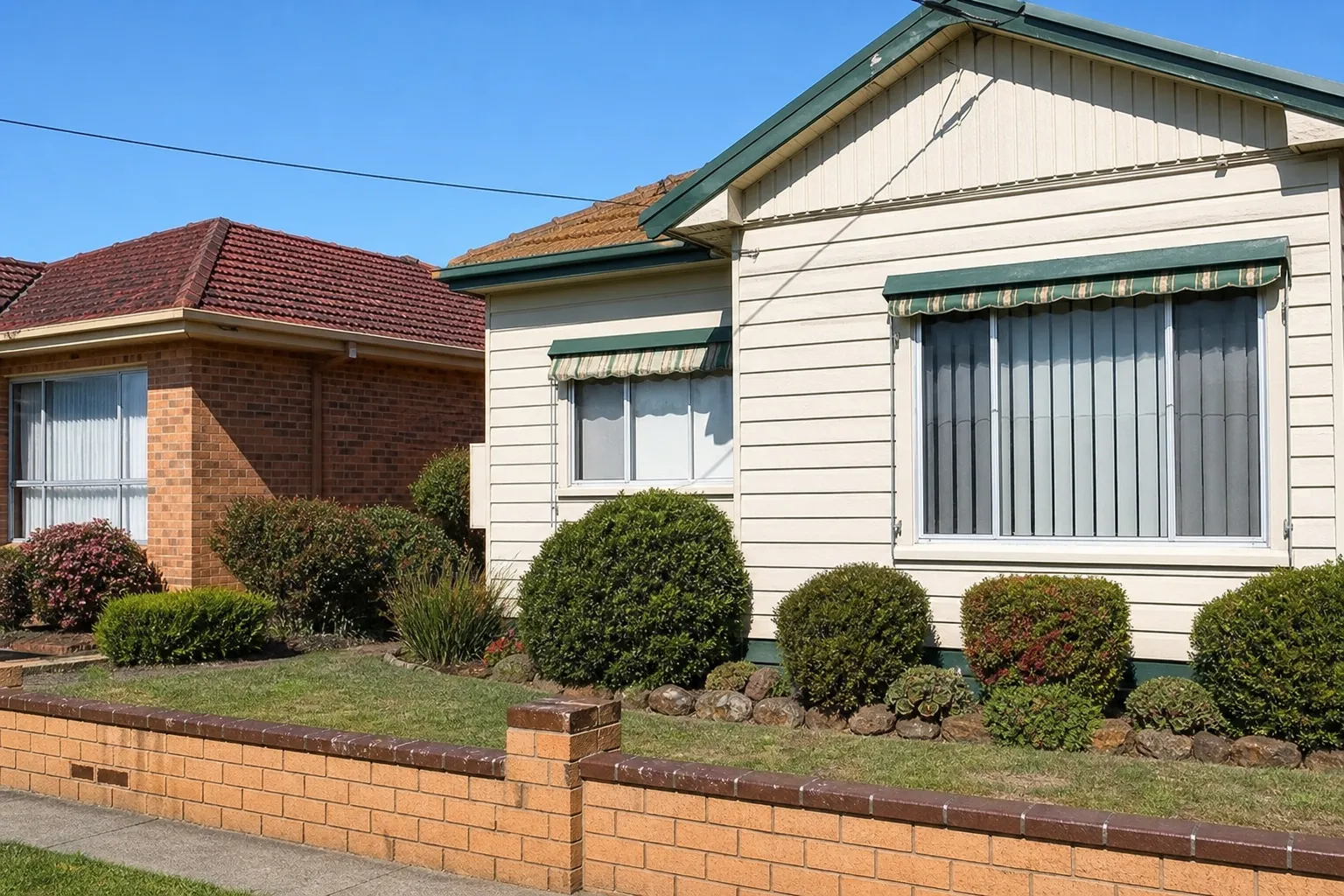
The 1960s were a transition period for stumps. Some Corio homes got timber, some got early concrete, and the two fail differently. Timber rots at ground level, while early concrete cracks and leans when the thin steel inside rusts and expands. From the lawn they both look fine; the truth is under the house, which is why we quote from an inspection rather than from the year the house was built.
Corio's flat basalt-plain clay behaves like Norlane's: hard shrinkage in drought years, swelling in wet ones. Long-established garden trees near a house dry the clay unevenly and drop one corner. The suburb's bigger blocks also collected sleepouts, garages and extensions over the decades, and those additions often sit on cheaper footings that have moved more than the house itself.
Reblocking is the Victorian term for restumping: replacing the stumps a house sits on once they rot, sink or crack.
Underpinning re-supports a house whose concrete slab or strip footings have sunk, usually by extending the footing down to firmer soil or onto screw piles.
House levelling, also called relevelling, brings sloping floors back to level by jacking the house and packing or adjusting the existing stumps.
A full restump of an average Geelong home usually costs $4,000 to $20,000.
Tell us about your place and we will get back to you with an honest assessment and a fixed price.
Houses here from the 1960s could have either, and part-restumped homes often have both. The quick check is a torch under the floor: grey square-ish posts are concrete, weathered brown ones are timber. Either way, age matters more than material, and we inspect all of them before quoting.
Probably not. Brick veneer walls sit on a concrete footing, not on stumps, so stepped cracking in brickwork usually points to footing movement, which is underpinning territory. We do both, and the inspection tells us which one your house actually needs. Cracks plus sloping floors can mean both are moving.