Reblocking
Reblocking is the Victorian term for restumping: replacing the stumps a house sits on once they rot, sink or crack.
Straight floors, solid stumps and an itemised quote you can hold us to.
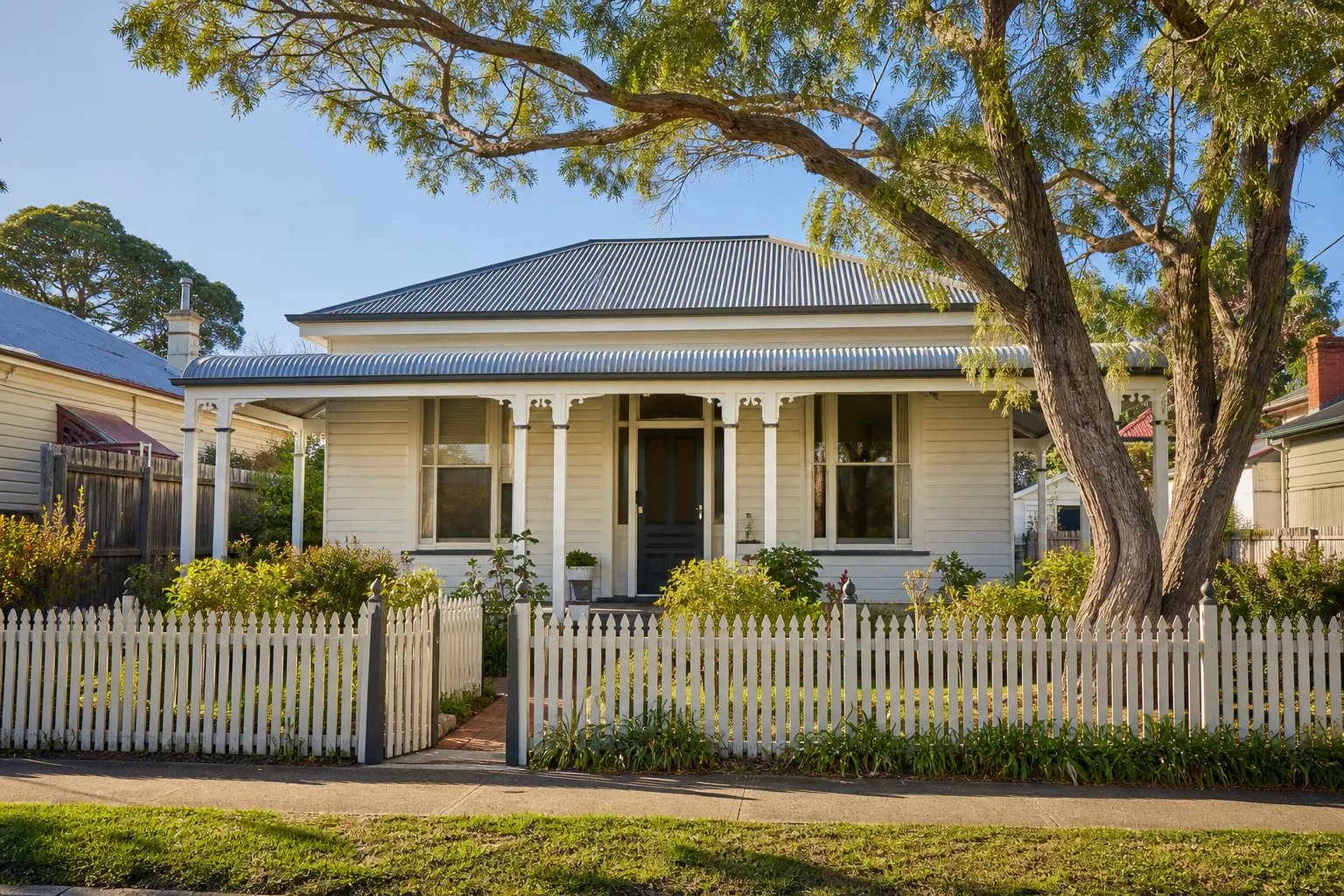
Restumping Geelong replaces failed house stumps across Geelong, the Bellarine Peninsula and the Surf Coast. Restumping, which Victorians also call reblocking, means jacking a house, removing the rotten or sunken stumps beneath it and setting new concrete or galvanised steel stumps so the floors sit level again. It's the standard structural repair for the region's older weatherboard and brick veneer homes, most of which were built on red gum timber stumps now well past their working life.
The work runs from relevelling and partial restumps to full restumps, underpinning for homes on slabs and strip footings, and the bearer and joist repairs that often go with them. Every job starts with a free inspection and floor-level survey, comes with an itemised per-stump quote, and runs under a Victorian building permit through to the surveyor's certificate of final inspection. If your floors slope, your doors stick or a building report has flagged the subfloor, request a quote.
Reblocking is the Victorian term for restumping: replacing the stumps a house sits on once they rot, sink or crack.
Underpinning re-supports a house whose concrete slab or strip footings have sunk, usually by extending the footing down to firmer soil or onto screw piles.
House levelling, also called relevelling, brings sloping floors back to level by jacking the house and packing or adjusting the existing stumps.
A full restump of an average Geelong home usually costs $4,000 to $20,000.
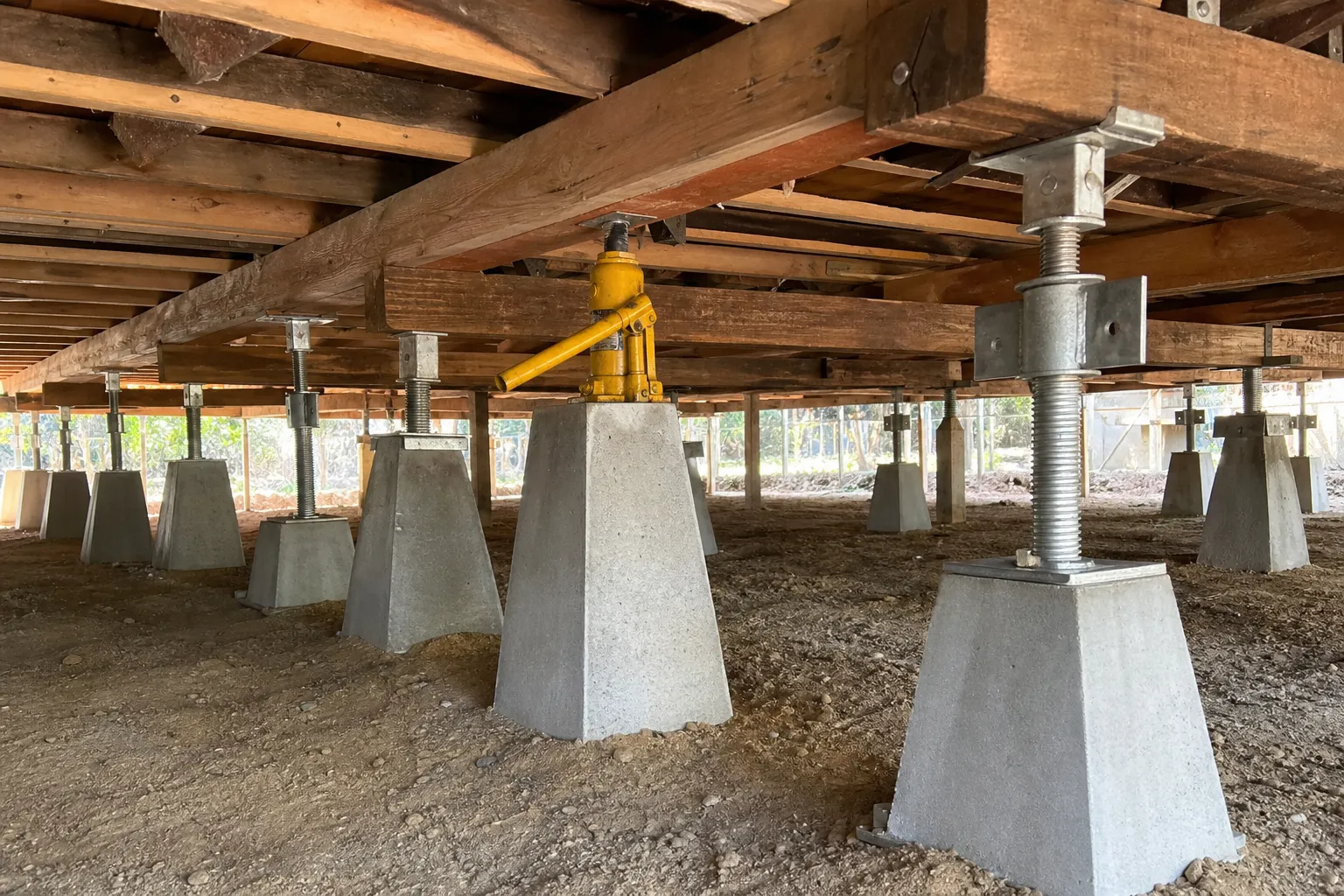
Concrete stumps are the standard restumping material in Victoria: steel-reinforced, termite-proof and commonly rated to last 50 years or more.
Partial restumping replaces only the stumps that have failed, usually a wet corner or one side of the house, while sound stumps stay in place.
Timber stumps rot from the ground line down, where soil moisture sits against the wood, and termites finish what damp starts.
Steel stumps are galvanised posts, usually with adjustable heads, that neither rot nor attract termites.
Subfloor repairs cover the timber between your stumps and your floorboards: bearers (the beams sitting on the stumps) and joists (the timbers spanning between bearers), plus the ventilation that keeps it all dry.
A sagging floor means something underneath has moved: sunken or rotten stumps, a failed bearer or joist, or plain long-term settlement.
Raise and restump means lifting a house higher than its original level while replacing the stumps, in one operation.
The main signs a house needs restumping: floors that slope or bounce, cracks in plaster and cornices, doors and windows that stick, gaps under skirting boards, and stumps that are soft or leaning underneath.
Every quote lists stump count, materials and permit fees line by line, so you can compare it honestly against any other bid.
Old red gum stumps and reactive clay soils are the daily reality of Geelong housing. We quote for what your house needs, and tell you when it needs less than you feared.
Restumping is structural work under Victorian regulations. Permits go through a registered building surveyor, and you keep the certificate at the end.
Sound stumps get relevelled, failed zones get partial restumps, and we put in writing why we recommend what we recommend.
We map your floor levels with a laser and check every stump, bearer and joist under the house, with photos.
A written, fixed quote priced per stump, with material options and permit costs shown separately.
The paperwork goes through a registered building surveyor before work starts. It's a legal requirement, and it's in the price.
The house is jacked in stages, old stumps come out, new footings and stumps go in, and floors are packed back to level.
The surveyor signs the work off, and you keep the documentation for insurance and resale.
Restumping, reblocking and underpinning across Geelong, the Bellarine Peninsula and the Surf Coast.
Tell us about your place and we will get back to you with an honest assessment and a fixed price.
Most full restumps land between $4,000 and $20,000, with per-stump prices commonly around $500 to $700 installed. Stump count, material and subfloor access set where a job falls in that range. Those are typical local figures rather than a quote; an inspection and stump count gives you the real number.
Nothing. They're two names for the same job: replacing the stumps a house stands on. Reblocking is the traditional Victorian term and restumping is used Australia-wide, so quotes and ads around Geelong use both. Underpinning is different: that's the repair for homes on concrete slabs or strip footings.
Usually not. Policies typically exclude gradual settlement, soil movement and wear and tear, which is how most stumps fail. Damage from a sudden insured event, such as a flood or burst pipe, is sometimes covered. Check your product disclosure statement and confirm with your insurer in writing rather than assuming.
Once, if it's done with the right materials. Original timber stumps commonly fail after several decades, depending on soil moisture and termites. Concrete and galvanised steel replacements are built to see out 50 years or more, so a properly done restump is likely the last one you'll pay for.
It depends what has failed. Sound stumps that have settled can be relevelled by packing or adjustment at a fraction of the cost, and localised failure suits a partial restump. Slab and strip-footing homes need underpinning instead. Genuinely rotten or sunken stumps have no lasting alternative; replacement is the fix.
Most homes take a few days to a week, depending on size, stump count and how much room there is to work under the floor. You can usually live in the house while the work happens: the lift is small, services stay connected, and we warn you about the noisy days.