Reblocking
Reblocking is the Victorian term for restumping: replacing the stumps a house sits on once they rot, sink or crack.
Restumping Geelong restumps homes across Drysdale and Clifton Springs, from the older weatherboards of Drysdale's township to the estate homes that spread over the Clifton Springs slopes from the 1960s on. If your floors slope or your doors stick, request a quote and we'll inspect the stumps.
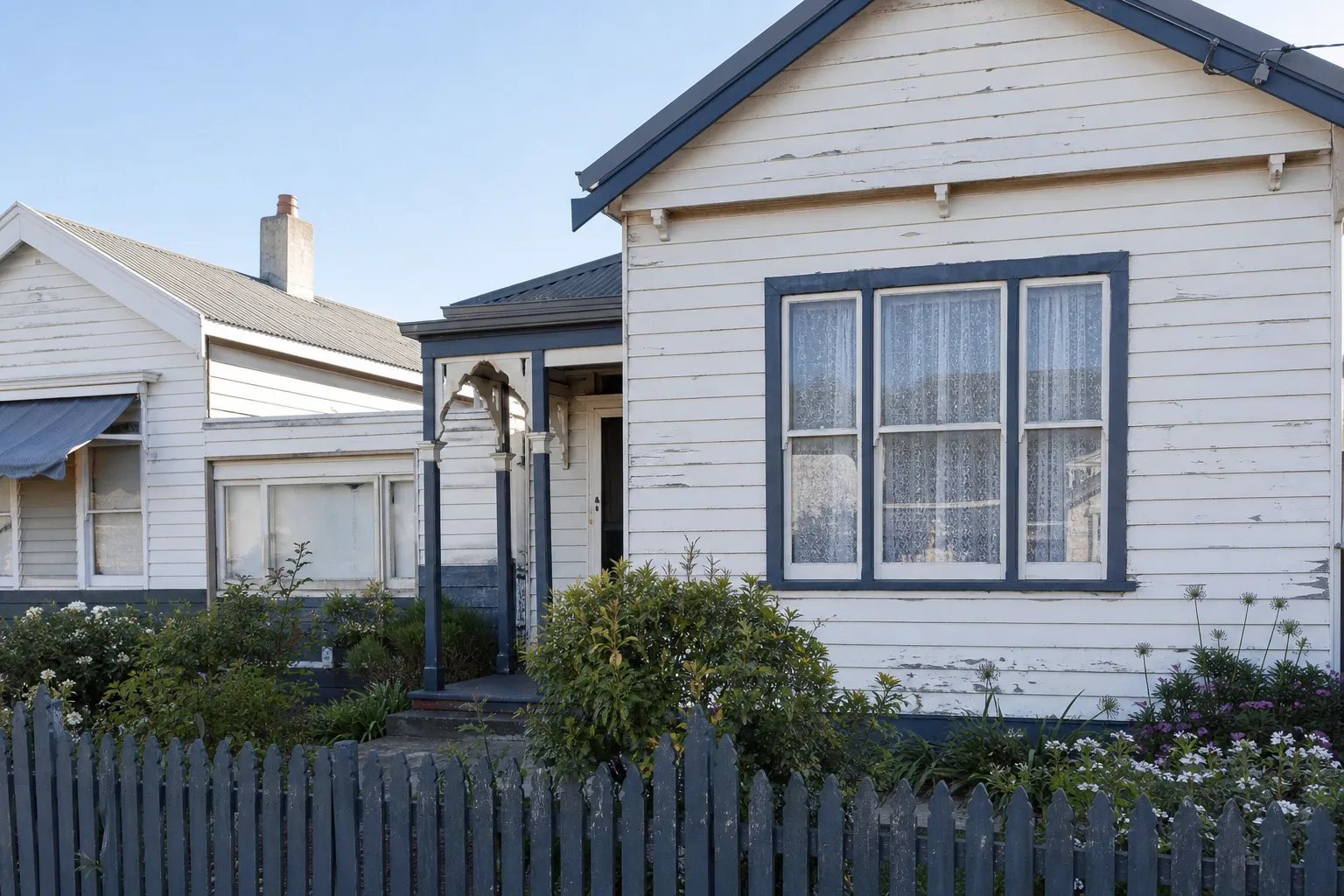
Drysdale and Clifton Springs run together on the north side of the Bellarine, but their housing is generations apart in age. Drysdale is the old town, settled in the 1850s and named for pioneer pastoralist Anne Drysdale, with older weatherboard homes around its town centre. Clifton Springs is largely a creation of the 1960s onward, when developers carved the surrounds of a former resort into thousands of house lots running down to Corio Bay.
That split decides the work. Drysdale's older stumped homes get classic restumping and relevelling. Clifton Springs homes are more often brick veneer of the 1970s and 80s, where movement tends to be footing-related, though stumped homes are scattered through both towns. Request a quote and we'll establish what your house sits on and what it needs.
Clifton Springs has a resort past: mineral springs discovered in 1870, a bottling plant, and a grand hotel that drew steamer passengers until the resort era faded. The Dell on the foreshore is what's left of the old springs precinct. The escarpment there is known to be unstable ground; the natural amphitheatre at The Dell was formed by landslips, and the City of Greater Geelong has commissioned coastal erosion and stability studies for the area. That instability is a foreshore issue managed by council, not a general verdict on the suburb's house blocks.
For homes in both towns, the practical concern is the district's reactive clay, which shifts stumps and footings with seasonal moisture, plus drainage on the slopes running down to the bay. Drysdale's older homes follow the pattern of country-town stock everywhere: original timber stumps of mixed vintage, additions from several eras, and the occasional past repair of varying quality. We map the subfloor before quoting, so the price reflects the actual house rather than an assumption.
Reblocking is the Victorian term for restumping: replacing the stumps a house sits on once they rot, sink or crack.
Underpinning re-supports a house whose concrete slab or strip footings have sunk, usually by extending the footing down to firmer soil or onto screw piles.
House levelling, also called relevelling, brings sloping floors back to level by jacking the house and packing or adjusting the existing stumps.
A full restump of an average Geelong home usually costs $4,000 to $20,000.
Tell us about your place and we will get back to you with an honest assessment and a fixed price.
The documented instability is on the foreshore escarpment around The Dell, and council manages it as a coastal issue. It doesn't mean houses across the suburb are at risk. If your home shows movement, sloping floors, sticking doors or cracking, the cause is far more likely ordinary stump or footing trouble, and an inspection will pin it down.
Yes. Drysdale and Clifton Springs are one service run for us, and Restumping Geelong covers Geelong, the Bellarine Peninsula and the Surf Coast, which takes in the surrounding peninsula towns as well. Request a quote and we'll fit your inspection into the next Bellarine run.