Reblocking
Reblocking is the Victorian term for restumping: replacing the stumps a house sits on once they rot, sink or crack.
Restumping Geelong restumps Newcomb's mid-century homes: the weatherboards and mixed-clad houses built when the suburb grew alongside the Point Henry industry. We replace failed stumps, bring floors back to level and repair damaged subfloor timber. Request a quote and we'll book an inspection at your place.
Newcomb grew from farmland into a suburb in the 1950s and 60s, helped along when heavy industry arrived at nearby Point Henry, with Alcoa opening in 1963. The result is a suburb of mostly mid-20th-century detached homes either side of the Bellarine Highway, many of them timber-framed on stumps, now with sixty-plus years of ground movement behind them.
That age profile makes restumping routine work here. If the floors in your place near Bellarine Village or Newcomb Central have developed a lean, or you can feel a soft spot in the hallway, request a quote. We'll get under the house, count the failed stumps and give you a written price.
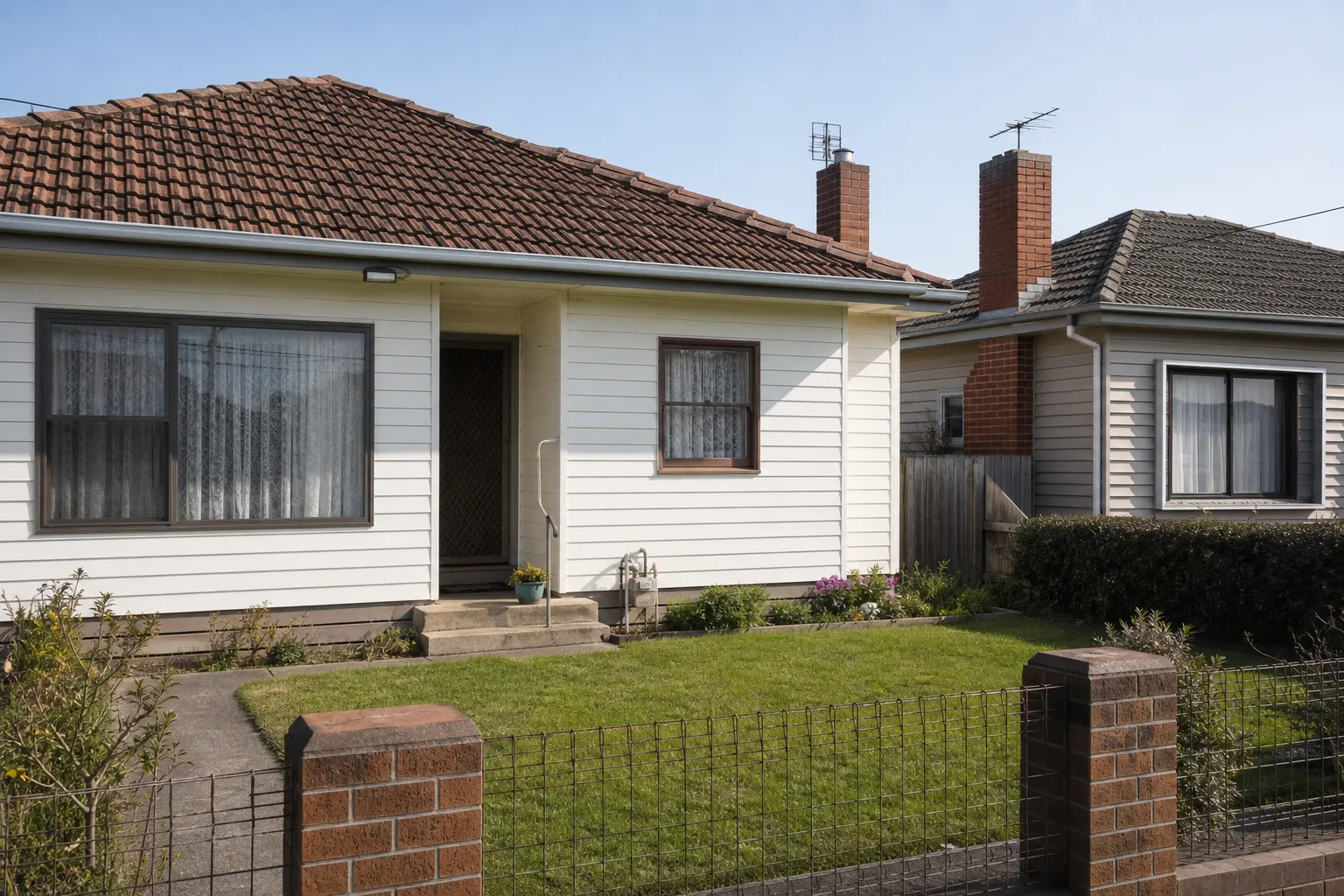
The suburb took its current name in 1956, after Caroline Newcomb, one of the pioneering pastoralist partners who worked this side of Geelong. The housing that followed is classic postwar: hip-roofed weatherboards and mixed-clad homes on stumps, built quickly for working families, with unit developments and infill now squeezing in as the bigger blocks get subdivided.
Ground conditions are flat clay that holds water through wet winters, especially on blocks where decades of paving and garden beds have changed how stormwater drains. Wet clay is the fastest way to rot a timber stump. When we restump in Newcomb we look at drainage as well, because new stumps in a wet subfloor inherit the old problem.
Reblocking is the Victorian term for restumping: replacing the stumps a house sits on once they rot, sink or crack.
Timber stumps rot from the ground line down, where soil moisture sits against the wood, and termites finish what damp starts.
House levelling, also called relevelling, brings sloping floors back to level by jacking the house and packing or adjusting the existing stumps.
A full restump of an average Geelong home usually costs $4,000 to $20,000.
Tell us about your place and we will get back to you with an honest assessment and a fixed price.
Depends on your plans. If the house is staying, restumping is almost always worth it: these are structurally simple homes that relevel well. If you're holding the block for future units, money spent on stumps rarely comes back. We'll give you a price either way so you can decide with real numbers.
A slow lean isn't an emergency, but movement compounds. Bearers slip further off stump tops, plaster cracks spread and the relevel gets harder the further the house drops. Restumping a house that's 30 mm out is an easier job than one that's 80 mm out. Sooner is cheaper, that's all.