Reblocking
Reblocking is the Victorian term for restumping: replacing the stumps a house sits on once they rot, sink or crack.
Restumping Geelong restumps and relevels Bell Post Hill homes from the suburb's 1960s and 70s growth years. Timber-floored houses of that era are due for stump checks now. If your floors slope or your doors stick, request a quote and we'll inspect the subfloor and price whatever it needs.
Bell Post Hill filled in during Geelong's postwar boom, with its strongest growth through the 1960s and 70s as industry expanded and young families pushed into the city's north-west. The name is older: it comes from a warning bell mounted on a post on this rise in the district's earliest days. The housing is mostly detached mid-century homes, a mix of weatherboard and brick veneer, with newer townhouse infill arriving in recent years.
Timber-floored homes built here in the 60s are now at stump-replacement age. The signs are the standard ones: a floor with a fall you can feel, doors out of square, cracks that reopen after patching. Request a quote and we'll tell you whether it's stumps, footings or nothing to worry about.
The suburb sits on one of the higher rises on Geelong's north-western edge, with views over Corio Bay from the top streets. Elevated clay blocks drain faster than the flats down toward Norlane, which is kinder to stumps, but the trade-off is more shrink-swell movement in dry years as the exposed ground bakes. Houses near the crest often show seasonal movement: doors that stick in winter and free up over summer.
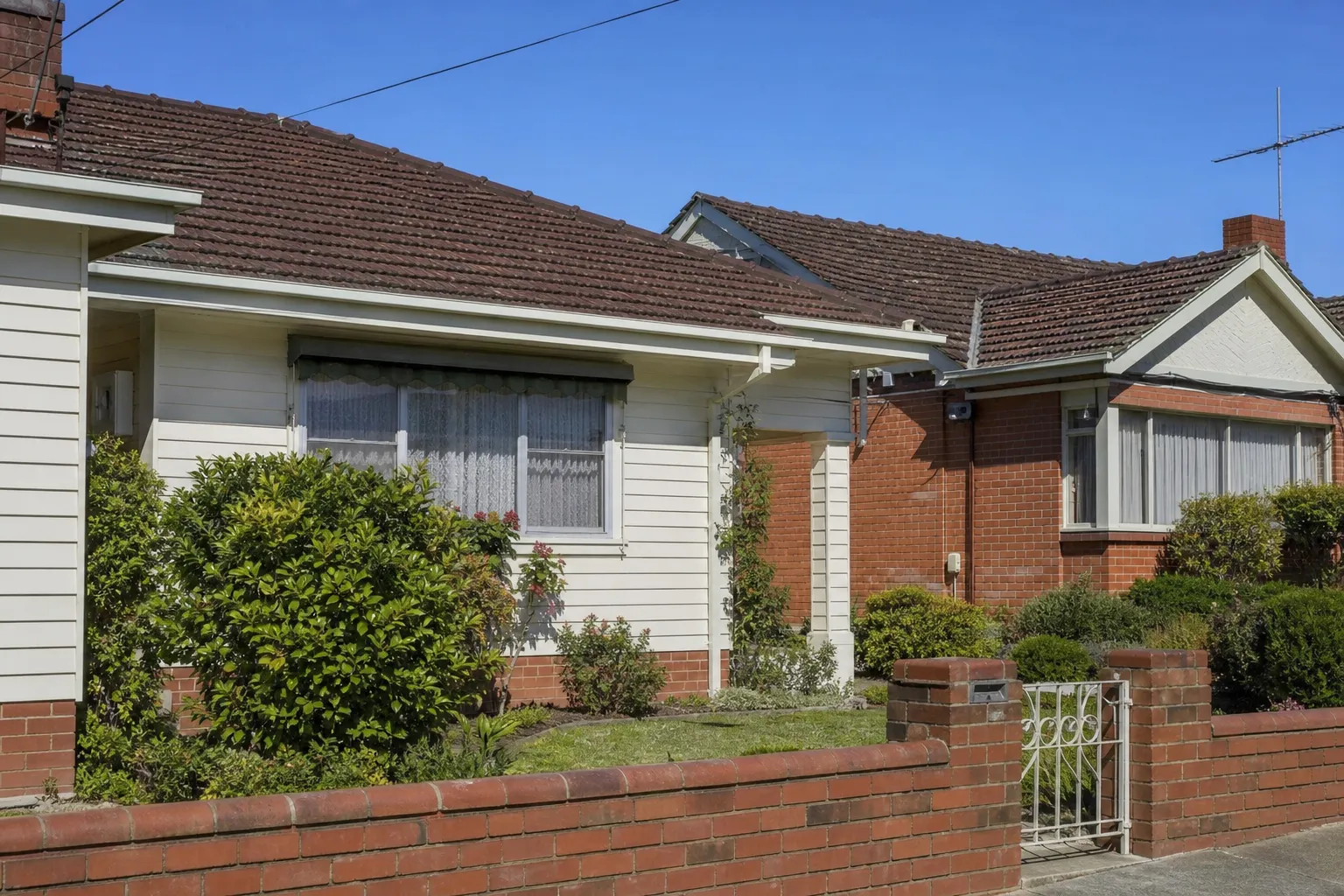
Stock-wise, weatherboards and mixed-clad homes on stumps share streets with brick veneer of the same era. Under the earlier veneer homes the floors are sometimes still timber on stumps, so don't assume brick outside means slab underneath. A five-minute look under the house answers it, and it changes which fix applies.
Reblocking is the Victorian term for restumping: replacing the stumps a house sits on once they rot, sink or crack.
Underpinning re-supports a house whose concrete slab or strip footings have sunk, usually by extending the footing down to firmer soil or onto screw piles.
House levelling, also called relevelling, brings sloping floors back to level by jacking the house and packing or adjusting the existing stumps.
A full restump of an average Geelong home usually costs $4,000 to $20,000.
Tell us about your place and we will get back to you with an honest assessment and a fixed price.
Could be either, and they feed each other. Reactive clay moves every house a little, but a house on sound stumps returns to position. If the doors get worse every year, or the floor stays out of level in all seasons, stumps are likely part of it. An inspection separates the two.
Yes, if the floor inside is timber. Plenty of veneer homes here have stumped timber floors behind the brick skin. The brick walls carry themselves on a footing while the stumps carry the floors, so a veneer home can have straight-looking walls and a sinking floor at the same time.